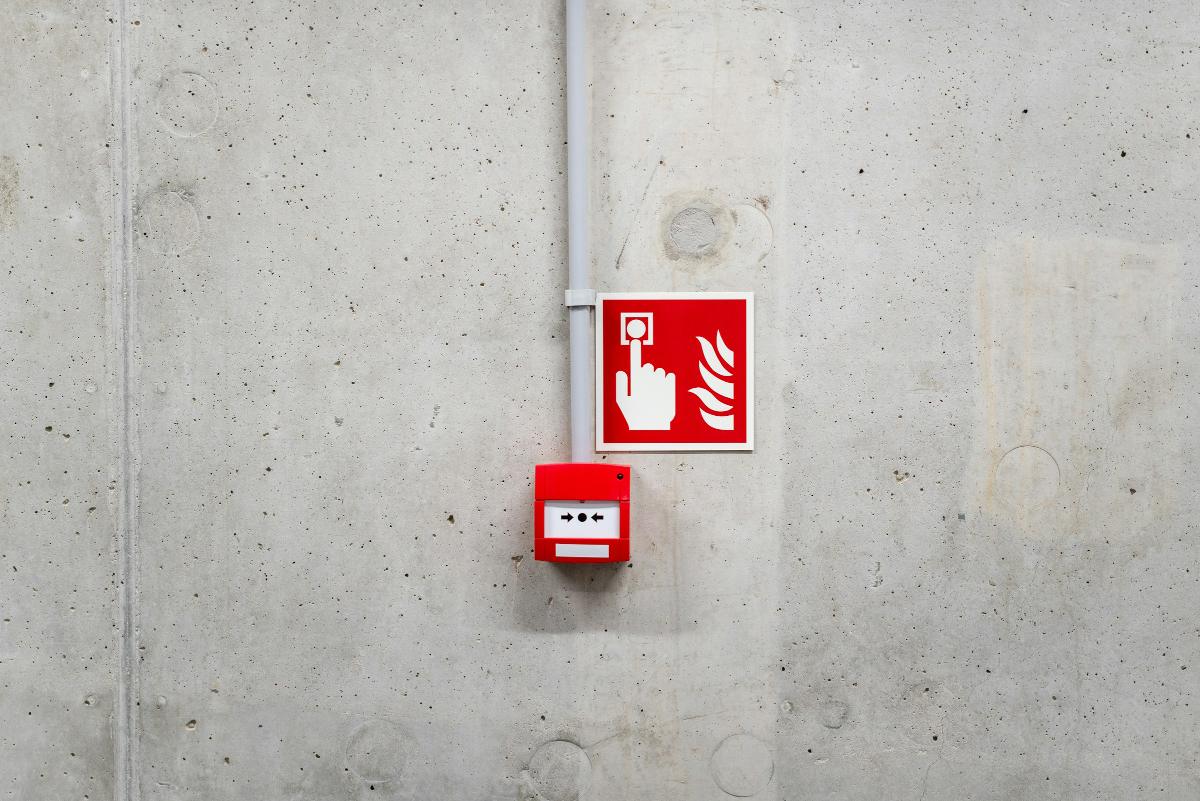
Commercial fire safety compliance, in plain English
What the Regulatory Reform (Fire Safety) Order 2005 and BS 5839-1 actually require of you, without the jargon or the scare tactics. Direct answers first, detail after.
The essentials
Who is the responsible person under the Fire Safety Order?
In a workplace, the employer. In any other non-domestic premises, whoever has control: usually the owner, landlord or managing agent.
The Order applies to virtually every building that is not a private home: offices, shops, warehouses, hotels, care settings, and the common parts of residential blocks. The responsible person can hire contractors to do the work, but the legal duty stays with them. Where control is shared, each party holds the duty for what they control.
How often should a commercial fire alarm be serviced?
At least every six months under BS 5839-1. Quarterly for larger or higher-risk premises such as hotels and care homes.
Between contractor visits, the occupier tests a manual call point weekly and logs it. The service visit is deeper: panel, batteries, a rotation of devices so everything is tested within the year, sounders and interfaces. Each visit ends with a certificate; a gap in certificates reads as a gap in maintenance.
What does BS 5839 require?
It is the British Standard for fire detection and alarm systems in non-domestic buildings, covering design, installation, commissioning and maintenance, each stage done and certificated by a competent person.
The standard defines the system categories (L1 to L5 for life protection, P1 and P2 for property), sets sound levels, detector siting and cable requirements, and describes the servicing regime. Contracts, quotes and certificates that never mention a category or the standard are a warning sign.
How often must emergency lighting be tested?
A short function test monthly and a full-rated duration test, normally three hours, annually. Both recorded.
The duration test is the one that fails: batteries degrade invisibly and a fitting that passes a flick test can die minutes into a real outage. BS 5266-1 governs the testing regime and the records. We schedule duration tests when the building can tolerate the recharge period that follows.
What happens if you don't comply?
Enforcement notices, prohibition notices that can close the building, unlimited fines for serious breaches, and personal liability for duty holders. Insurers can also walk away from claims.
In practice, enforcement usually starts with an audit letter and escalates only where duty holders ignore it. The duty holders who end up in court are almost never the ones with an imperfect logbook; they are the ones with no logbook, no assessment and no contract. Basic, evidenced compliance protects you.
Are you compliant? Seven questions.
Tick what you can honestly evidence today, not what you believe is probably fine. The result tells you whether a compliance check should be urgent or routine. Nothing you enter is sent anywhere.
When is your next service due?
Enter the date on your last certificate for each system and see what is due. It works from the standard intervals; your fire risk assessment may set shorter ones. Nothing leaves your browser.
No date Enter the last service date
No date Enter the last service date
No date Enter the last service date
Something overdue? Tell us the date and we will plan back from it.
Fire safety compliance FAQ
Who is the responsible person under the Fire Safety Order?
In a workplace it is the employer. In other non-domestic premises it is whoever has control, usually the owner, landlord or managing agent. The duty cannot be contracted away, only the tasks.
How often should a commercial fire alarm be serviced?
At intervals not exceeding six months under BS 5839-1, with quarterly servicing recommended for larger or higher-risk premises such as hotels and care settings. Weekly user tests remain the occupier’s responsibility between visits.
What does BS 5839 require?
BS 5839-1 is the code of practice for fire detection and alarm systems in non-domestic premises. It covers system categories, design, installation, commissioning and maintenance, and expects each stage to be carried out and certificated by competent persons.
What are fire alarm categories L1, L2, L3, L4, L5 and P?
L categories protect life: L1 is full coverage, L2 adds defined high-risk rooms to escape routes, L3 covers escape routes and adjoining rooms, L4 escape routes only, L5 is targeted at a specific risk. P1 and P2 protect property. Your fire risk assessment determines which you need.
How often must emergency lighting be tested?
A brief monthly function test and a full-rated duration test, normally three hours, every year, both recorded. The requirements come from BS 5266-1.
What happens if I don’t comply with the Fire Safety Order?
Enforcement ranges from informal advice to enforcement and prohibition notices that can close a building. Serious breaches carry unlimited fines and, for individuals, imprisonment. Insurers may also decline claims where maintenance conditions were not met.
Do I need a fire alarm servicing contract by law?
The law requires the system to be maintained in efficient working order by a competent person. A servicing contract is the recognised way to meet and evidence that duty, and most insurers and licensing authorities expect to see one.
What records do I need to keep?
A fire logbook: weekly user tests, service visits, faults and their resolution, false alarms, emergency lighting tests, extinguisher services, staff training and drills. We keep all of it on one record per premises and send it as one pack.