Fire safety · Greater Manchester
Fire extinguisher supply and servicing
The right extinguishers, in the right places, serviced every year to BS 5306-3, on the same visit as your alarm service.
The service
Small kit, big audit item
Extinguishers are the simplest duty on the list and still one of the most common audit failures: wrong type for the risk, missing commissioning, service labels years out of date, or a CO2 unit hidden behind a pot plant. BS 5306-8 covers selection and siting; BS 5306-3 covers commissioning and the annual service. We do both.
Supply starts with the risk, not a catalogue. Water mist or foam where it suits the occupancy, CO2 at electrical risks, wet chemical in kitchens, and no more units than the building needs. Every extinguisher is commissioned on site, mounted correctly and signed.
The annual service happens during a bundled maintenance visit, so it never gets forgotten and never generates a separate invoice. Condemned or discharged units are replaced on the spot from van stock in most cases.
From enquiry to certificate
No sales visit and no three-week wait to find out what it costs. Tell us your deadline and the dates are planned back from it.
Form or phone. We ask for the postcode, the premises type and any deadline you are working to.
An engineer walks the building, counts the devices, checks the panel and the logbook, and notes what is missing.
A written figure for the contract, plus a separate price for anything that needs putting right first.
Certificate, logbook entries and priced defects, emailed to you within 48 hours.
Common questions
How often do fire extinguishers need servicing?
A basic service every 12 months by a competent person, with extended service at five years for most types and overhaul or replacement at ten.
CO2 units follow a different cycle, with overhaul at ten years. The dates live on the service label and in your certificate pack, so the extended services are planned rather than discovered.
What extinguishers does my premises need?
It depends on the risks present: water-based cover for general combustibles, CO2 for electrical, wet chemical for kitchen oils.
Your fire risk assessment drives the answer. A typical office floor needs surprisingly few units correctly sited; a commercial kitchen needs specific types positioned by the hazard. We would rather site six correctly than sell you twelve.
Do extinguishers need to be wall mounted?
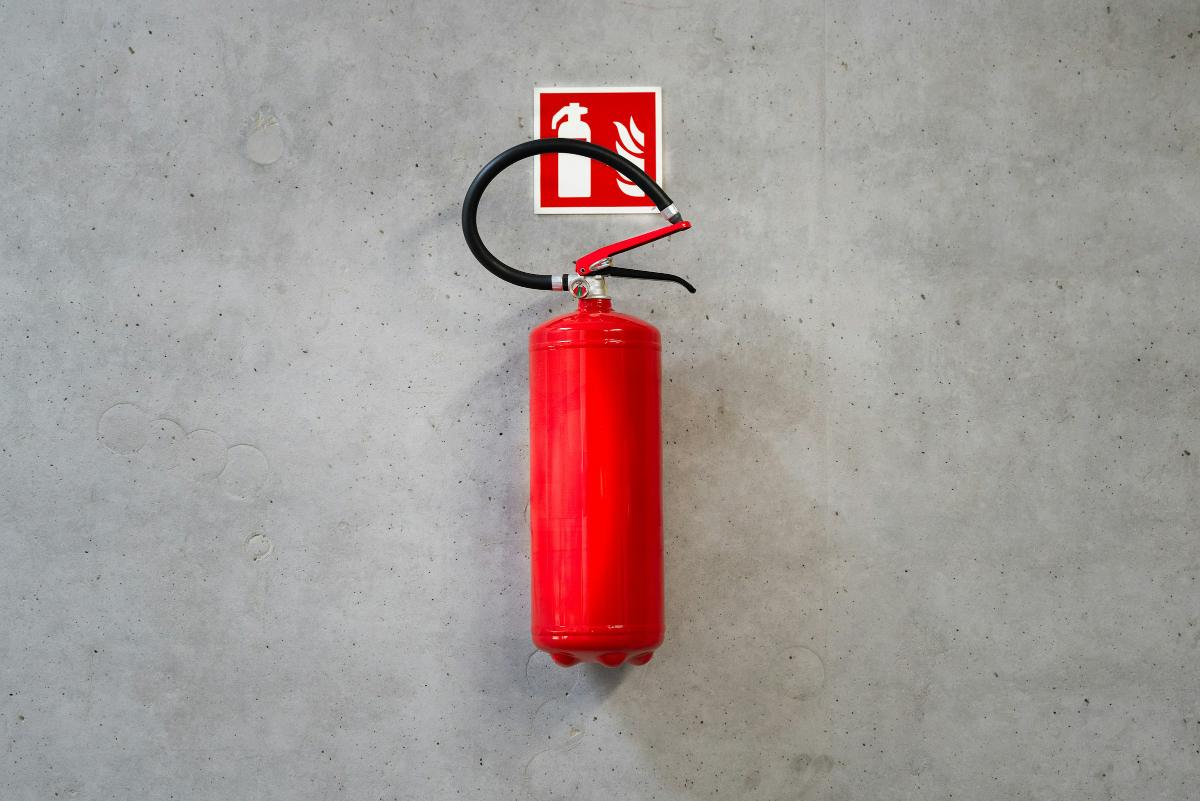
They need to be visible, accessible and on a bracket or stand at the correct height, not standing loose on the floor.
Loose extinguishers migrate, get used as door stops and fail audits. Mounting and signage are included when we supply, and corrected when we take over an existing estate.
Better bundled: this service costs less and works harder inside a planned maintenance contract covering alarm, lighting, extinguishers and risk assessment together.
Get a contract priceFire extinguisher questions
Still unsure? Call 07703 295654 and ask an engineer directly.
How often do fire extinguishers need servicing?
An annual basic service by a competent person under BS 5306-3, plus a monthly visual check by the occupier that the unit is in place, unobstructed and in the green. Water and foam extinguishers also need an extended service every five years, and CO2 units every ten.
How many extinguishers do we need and where?
BS 5306-8 sets the coverage: broadly one class A extinguisher per 200 square metres per floor with a minimum of two per floor, plus units for the specific risks present, such as CO2 near electrical equipment and wet chemical in kitchens. Travel distance to any extinguisher should not exceed 30 metres.
Can extinguishers be serviced at the same visit as the alarm?
Yes, and combining them usually costs less. Where you hold a maintenance contract we align the extinguisher service, the alarm inspection and the emergency lighting duration test into as few visits as the standards allow, so you get one set of certificates on one date.
Who is allowed to service a fire extinguisher?
A competent person, which BS 5306-3 defines through training, experience and access to the right tools and spares. Ask any contractor for their certification before they touch a unit. A service label is only worth what the person who signed it is qualified to say.